
Our street markets
St Albans has one of the oldest street markets in England, established in circa 860 by Wulsin, the sixth abbot of St Albans.
Following the dissolution of the monasteries, the right to hold the market on Wednesdays and Saturdays were sold to the town in 1553 via letters patent by Edward VI. This formal grant or charter also incorporated St Albans as a borough.
The Wednesday and Saturday markets have had many changes of character and format over the years. Until 2021 stalls, with awnings in the city’s yellow and blue livery, were erected for stallholders by St Albans City and District Council, the body that runs the market.
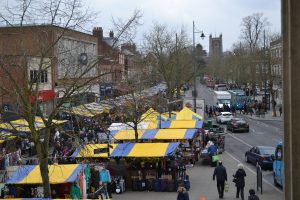
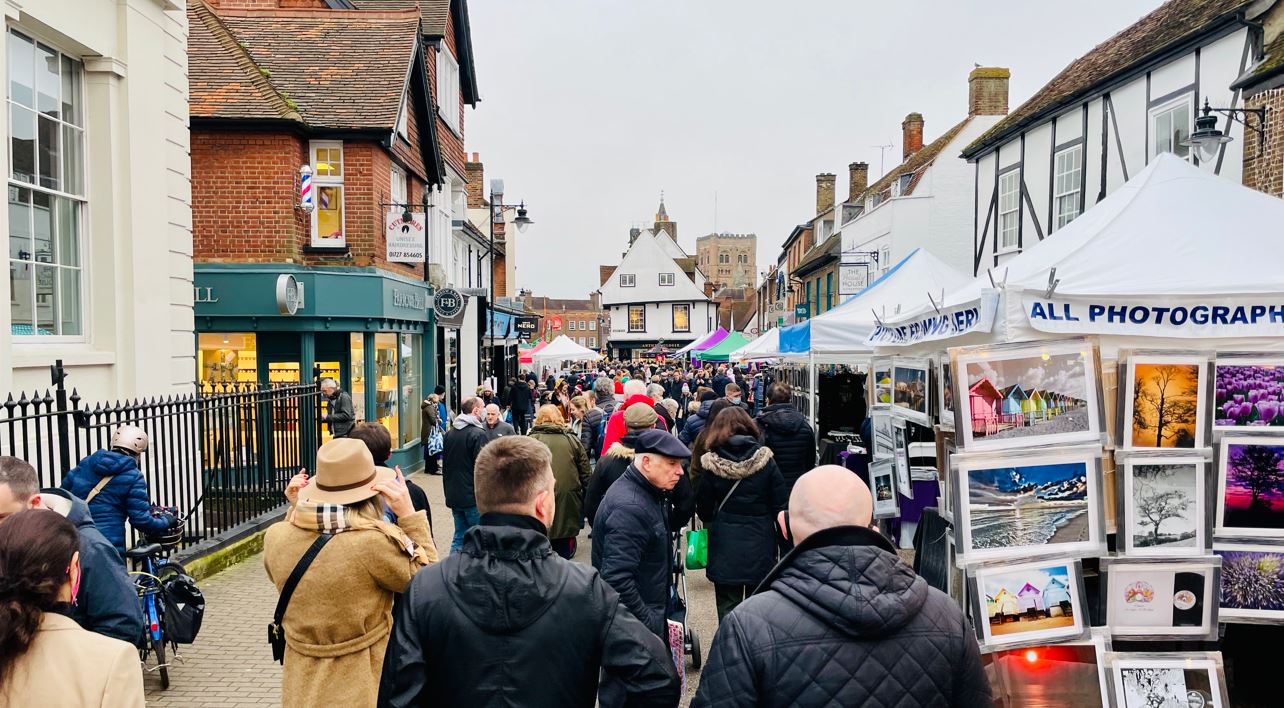
Cost considerations and the impact of Covid lockdowns brought changes. Today stallholders have to supply and erect their own stalls and awnings or gazebos – a transition that was difficult for many and has changed the range and nature of what is sold, with slightly fewer general stalls and a wider range of international street foods.
After a dip in the number of stallholders between 2021 and 2023, the Wednesday and Saturday markets are back to strength and are supplemented by special markets on other days. Today the markets have a less uniform look and feel but have around 150 stallholders on Saturdays with a consistently high footfall.
There’s information online for visitors, including a link to the Wikipedia page on the history of the markets. There’s also a page with details for traders.
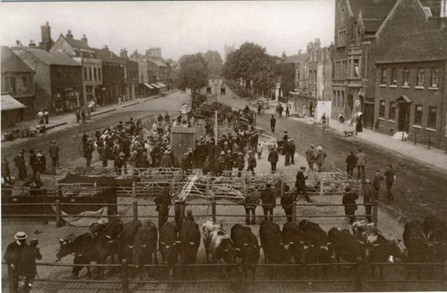
St Albans Museums keeps photos of the old livestock and corn markets held in Market Place and there’s a history piece on the on the St Albans & Hertfordshire Architectural and Archaeological Society website.